How many times have we heard tennis experts complaining about overly defensive players getting to the top of the world rankings?
Solidity takes you to the top, but will not make you win slams. Or so they say.
But is this really a bad thing for women’s tennis?
Jelena Jankovic and Caroline Wozniacki have been world number ones for 85 weeks combined, Agnieska Radwanska has reached a slam final and peaked at world number two, Sara Errani has been a solid top 10 player with a slam final in Paris.
Nonetheless, thevmedia seems to crucify them and describe them as being one of the worst plagues in the history of tennis, but they are very wrong, and this is why:
Let us take the Pole as an example.
The older of the Radwanska sisters constantly receives a great amount of criticism by the press and yet she has won the Fans' Favourite award held by the WTA for three consecutive seasons.
The 2012 Wimbledon finalist does not have the power to out-hit her physically stronger opponents, but her smart reading of the game and the variety of shots in her game-plan, often set her in a position of advantage against the one-dimensional ball strikers.
Probably the hottest potato is Caroline Wozniacki though.
The Dane has reigned on the top of the rankings for 67 weeks, finishing the season as world number one for two consecutive years. Amazing stats, but she has never won a slam title.
The beautiful blonde player from Odense has probably attracted the most criticism a world number one has ever faced.
Curiously, whenever she steps on court, the crowd, more often than not, sides with her, even now that she has fallen from grace and struggles to remain in the top 10.
Wozniacki has got career wins against all the players currently in the top 10, but for most of the experts there is little merit in those wins, which were “handed to her by the errors of her opponents.”
What often goes under the radar is the fact that the amazing defensive skills of the likes of Wozniacki force their opponents to always hit one or more additional balls.
This consistency and athleticism exposes the weaknesses of most of the hard hitters and makes the matches more mentally demanding.
One could say that they make their opponents play badly, which is not far from the truth. Their defensive game is the key to forcing opponents’ errors and at the end of the day, is that not just as much of a weapon as a massive forehand or deadly slice?
Another argument in support of the “pushers” is given by their long-term consistency. Their rankings are based on numerous solid results and a level of play that may not peak as high as many other players on tour, but rarely sinks as low.
Last, but not least, they provide a spectacle.
It may seem a
paradox just after my point on their ability to make others play badly,
but when watching their matches, the intensity of their rallies and the
variety of solutions to turn defence into attack is what keeps the crowd
on the edge of their seats.
A flashing return winner may result
in loud applause, but a long and intense rally, ending with a winner on
the run, makes the public jump and scream.
On tv I see
the best athletes of the world, painting with their edges lines on the snow as poetic
as the verses of Shakespeare.
It has been
seven months since the last time I did the same. Maybe my edges were not
painting like Michelangelo and my moves not as smooth as Baryšnikov’s, but my
passion was there, as big as theirs.
Today I am
in London,
miles away from the closest hint of snow, my skis are at home, sharpened and
waxed as if tomorrow there was another race.
Tomorrow there
will be none, nor the day after, nor the one ahead…truth is that there won’t
ever be another.
It is very
hard to come to this conclusion, because since I was as tall as a bonsai I’ve
dreamt of being one day the best of the world and bringing home an Olympic gold
won in downhill in front of home crowd in Tarvisio.
Childish? Yes,
but it was a strong desire, as strong that I decided to grow up early and once
15, move out of home and live and study in a ski college.
But I still
remember the time I broke into skiing, I was far from being good, I was quite a
disaster actually. My brother was the champion, I was more the likes of a mascot.
It looks better than it actually was back then.
Yet, even
when results were not there, even when no one else was believing in my chances,
my brother would. He has always thought I had what it takes, even though he
would have never told me straight, he is not the kind.
Soon I started
to believe in that too and fast from closing the rankings I started collecting
my first podiums and being talked not only for being “his brother”.
The first
year on the international scene has been something I will always remember. It was
a mess, one of the most horrid winters I’ve ever seen: warm, rainy and
chanceless.
We all
beginners had no ranking first and whenever we could make it to an entry list,
bibs were always with 3 numbers and more often than not the first was a 2. Even
the very best of my age were struggling to make a breakthrough.
I hit some
form late in the season, I always did, no idea why. But in training things were
going well, I was feeling like never before and when the regional team called
me to go and race with them in Austria
for some speed events I was higher than cloud nine.
I forgot to
tell, ever since I moved my first steps in the world of snow I was classified
as a “slittone”, meaning sledge, Italian skiers’ slang for gliding specialist. Maybe
because of my big body, maybe because of some natural talent, I’ve always
produced my best whenever the slope would go fast and the gates further.
For this
reason I was sure to be speed racer, for this reason my dream was an Olympic gold
in downhill.
With some school mates training.
I couldn’t
believe how ironic could my weekend be that time in Innerkrems. In 48 hours my
career somehow began and crumbled.
We had a
superg the first day, I was euphoric, I can’t remember much of that race, I remember
only a massive and horrible mistake on a very flat section, the rage in my
heart trying to make up for that in the last gates and the surprise watching my
time. I was one of the best of my age in that race, despite the error, despite
my being a no-one.
The fairytale
lasted short though and it ended in 24 hours, when on the same slope we were
all doing the last training run before the downhill race.
It was
snowing and it was quite dark, I was overconfident and decided not to give my
100% in the last two gates.
Isn’t it
ironic? The day before I gave my heart and soul on the same section, that day not
even half of it.
Suddenly something
happen, an edge grips on the fresh snow, the ski follows and so does the rest
of my left leg, while the right one and my body still aims at the finish line.
I scream. I
can’t even cry, I feel too much pain to cry while my body rolls down crossing
the finish line.
The time is
great, my knee is not. I am flight to the nearest hospital, where a while later
a doctor tells me a few words that I won’t ever forget: “A part from the meniscuses,
there’s not much safe in your knee.”
Then later,
while my dad is helping me out of that place, the same doctor adds: “Don’t despair,
Herman Maier could come back, you can do it too.”
Eventually,
further tests showed that the damage was not as big, but my recovery was far
from easy anyway.
Same day,
March the third, one year later.
I am at the
start of another speed race, National Junior Championships. My bib is good,
despite the season has been far from exciting.
When I said I couldn't just, I didn't lie
Still, I know
I can make it, my brother knows it as well and this time he tells me. For this
reason he has taken his car and came all the way up to watch me.
A rival of
mine tells me at the start: “You know which day is it today? Some things happen
over and over again, remember!”
I shout him
up and add to my motivation list a new point: ‘I want to see his face at the
end of this.’
I love the
slope and the setting, there’s only one passage, one jump, for the rest I feel
terribly confident.
I am a
terrible jumper, but I know I can do it, I’ve done it already, 20 meters, I can
do it, 10 meters, I will do it. 5 meters, I…am flying, without control. I am
scared to death. In few seconds I see the ground far below me, I remember the
helicopter, I remember the doctors, the pain and all the effort to come back.
‘Not again.’
I think while I do not know how I avoid crashing against the ground and after
almost 40 meters from where I departed, I land and continue my race.
My mind is
elsewhere and when I cross the finish line I am still in a status of shock. It
is not the podium I dreamt of, but the result is quite good, but I cannot
realize it. I am shacking, can’t really speak.
My brother
comes and all I can say is ‘I am fine’ before crying on his shoulder.
That evening
in Falcade, while doing my jogging I stopped in the church and fired my first
and last candle ever for something related to skiing. For stupid it may seem, I
was glad I was still on my legs.
Once back
from this experience, on a random afternoon I show a friend the video, while
the coach of the women team passes by. He looks at me and says: “I don’t know
why you keep thinking you are a speed racer, in my opinion you are more
suitable for slalom.”
I basically
laugh at his face and so do most of the people I told this, funny enough a few
later he will be my coach and he proved me how right he was.
The following
season is ok, nothing amazing, but I had a couple of nice runs here and there
and I feel like I am ready to step up.
I change
brand of skis and for every step I thought of doing ahead, I do two backwards. Nothing
works and my body refuses to collaborate as well. I am found a genetic problem
at the back, I am forced to retire often, I am training little and my mood falls
as low as my world ranking.
As the last
slap in the face, I fail to pass the ski instructor selection, while most of my
friends go through.
‘Enough is
enough, I quit.’
I am sick
of trying for nothing, my results are worse than in my first year, my body
feels like the one of a man in his 80s and I can not find any reason why I should
go on.
My brother
then tells me: “take the spring and the summer off, if by August you don’t feel
like skiing any more, that’s it.”
I am out of
my ski college, I got my highschool diploma and soon I will start the uni, but
in July I take a trip around Europe with two of my best friends and out of
nowhere one of them, Ele, tells me she has joined my ski-club as her coach has
now signed with them.
He is
Sandro, the guy who told me about being a slalom specialist. For some obscure
reasons I feel like skiing again.
Without trying
it, I get a new brand of skis for the season and train little in the autumn,
but most of those days were the best of my life. I don’t remember whether I was
skiing well or not, but I was having some of the greatest fun ever on snow. It suddenly
was like when as a kid I was racing with my brother and dad during holidays. Skiing
was fun, again.
Suddenly I can do things I thought I never could
The first
race of the season I am set to be a forerunner. After the horrible season just
passed, my world ranking is not good enough to enter the field. But I do not
particularly care, I have trained seventeen days only in the past four months
and I am up there only to do a bit more training.
Sandro
comes back from the jury meeting late. A guy called sick at last, so I got a
last minute number for the next day.
I am barely
top eighty of the race and the snow is soft, meaning that I will race luge
rather than skiing.
At the
bottom of my run I am not happy with myself, I know I have been skiing better
in the previous days. Then a team mate calls me to reality, I am almost top
ten.
I am
shocked, but I don’t feel the pressure going for the second run, I find the
whole thing extremely funny. Not long ago I did not even know if I would have
raced anymore and now I was as high as never in slalom!
The second
run is again a good one, I finish eight and I crush my best ever result, not
only in slalom, but in whichever race.
The second
race follows almost the same track and immediately my world ranking sets me as
one of the best of my area.
The season
goes on like in a dream, a fairytale that brings me to three achievements that I
never thought possible before: I beat my brother’s career best ranking, I become
the first skier from my city to race under 40 points FIS and finally I win my
first international race.
Suddenly everything
works and I score amazing results even in the hated Giant Slalom, where I end
up collecting the most of my podiums.
On the podium of my first FIS win
The season
ends in a bittersweet taste as I completely screw my chances at the Italian Championships
in slalom, while in downhill, my second in over three years, the possibly amazing
result has been diminished by the warm temperature and so a slower track on the
latest part. I was 18th at the last intermediate.
I end the
season thrilled anyway and as an addition I finally pass the ski instructor
entry test.
The following
season is solid, it lacked the peaks of the amazing one just passed, but it is
expected…I am tired and not fully focused having my time divided among ski
races, ski instructor course and university.
The best moment was definitely representing Italy at the World Citizen Championships in Garmisch Partenkirchen, despite racing not at my best.
Last season,
my last season I can really call it now, feels strange. I immediately feel
tired, but differently from ever before.
I suddenly
feel old.
At the
races I am almost always one of the oldest, I am not a junior anymore and I have
to travel alone for half Europe to race. I am
not skiing badly at all, but results fail to come and it always feel more and
more tiring to train, to travel, to race.
I am not
giving up though, but I sign a bond with myself: ‘I have a shot at the next
Winter Universiade, it is not the Olympics, but this will be my make it or
break it.’
Then in February
something happen. In my favourite ski race of the year, the night slalom of
Zoldo, Citizen Ski World Cup, I feel like two years back in time and in my eyes
there’s fire while racing down the first run.
I am first.
With more than half a second of gap on the rest of the field.
Like that
day when my new career started I don’t feel any pressure, I find it funny and
when I start the second run it feels like my night. I know it’s my night.
I am fast, I
know I am faster than anyone before me, it is just few gates…I can see the
finish line, I can feel my family counting the seconds, I can feel my coach
holding his breath.
Suddenly there
is a sense of emptiness in my stomach, as if I was falling.
I am
falling. My boot hit on a bump and is dragging me to the white hard ground of a
defeat. The biggest.
I get back
on the course, I know it is too late, but I want to finish the race. I want to
see the first run’s time next to my name.
That night in Zoldo, I felt great again.
I don’t
stop at the finish line, I just want to disappear, I want to be anywhere else. One
should not, but I feel, I know that I have just wasted my last chance and
suddenly it’s over.
I try to
laugh at my bad luck as I go back on start to get dressed, then I reach my
coach and expect him to shout at me, I wish he does. But he knows I have been
punishing myself enough, he feels as torn as I do. He probably knows, like I know
that this was the last call.
If I have a
regret in all my career, that night I got one and no, it is not my mistake in
the race. I regret not having hugged my coach and told him that he has been
amazing, over the years like that night.
In a few
weeks I am called upon my last train for my pact with myself, the Italian
University Championships, but as a deciding last epitome to my career my left
knee decides not to hold together anymore. I collapse on the side of the race
as my knee swells.
I try a few
more races with a kneepad, but it is useless, it is not only my body crying for
a break, my mind too.
Half a year
has passed now, over the summer I have become a ski coach, now I am in London studying sports
journalism.
I don’t
dream of winning the Olympics anymore, but I still dream of going, as a
journalist this time. I am happy of my choice and when looking back at all
those years I am proud of what I achieved and I feel lucky having had so many
amazing persons on my side.
But before
definitely going on I felt the need of writing the words “the end” and despite
my status on the FIS site says active, I officially am calling it a career.
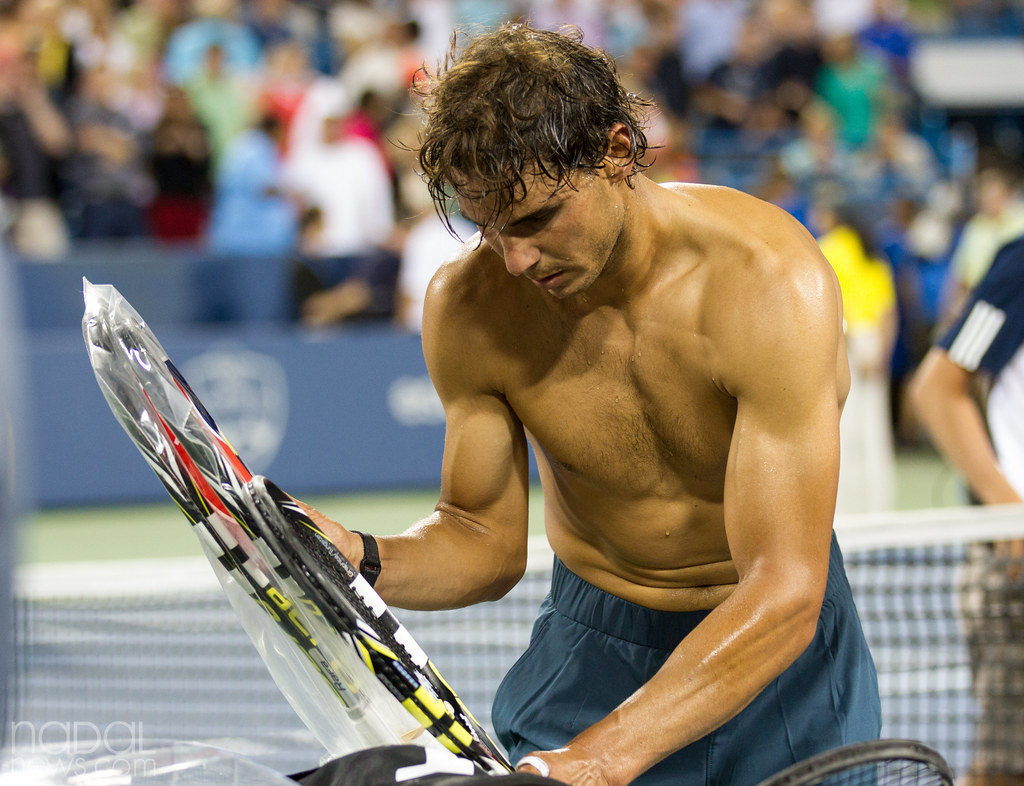
“This is a sport, and you can have victories or defeats. No one remembers defeats in the long run. People remember victories.” It was 2009 and Rafael Nadal was giving his first press conference after a defeat at the Roland Garros. First time, sole time. In nine appearances he has lost only once on the French clay.
11 November 2013, he has just lost the year ending final to his biggest rival of the past few years, Novak Djokovic. After his best season ever in his career, the Spaniard has failed to grab the only title missing in his palmarès: the ATP World Tour Finals. His voice is still the same as usual in the press conference and despite the loss he says: “The only thing that I can say is congratulate my opponent and at the same time congratulate my team because all the achievements, all the success that I had this year, without my family, all my team, it was impossible to have; all the special feelings, the special moments.”
Arguably the best clay courter ever in the history of tennis, surely one of the best tennis players of all time, and yet, Nadal feels like he is the same guy as always and his life outside of tennis reflects that as well.
Humbleness and humility are clearly the most suitable words to describe the left-handed from Majorca. Contrary to what the spectator can see on court, there is no loud grunt, nor noisy “vamos!” once his matches are over.
“[My] ambition is to be a very, very normal guy. A very humble guy. To play tennis, which I love and want to be the best. And, when I'm done, I just want to be at home with my friends.”
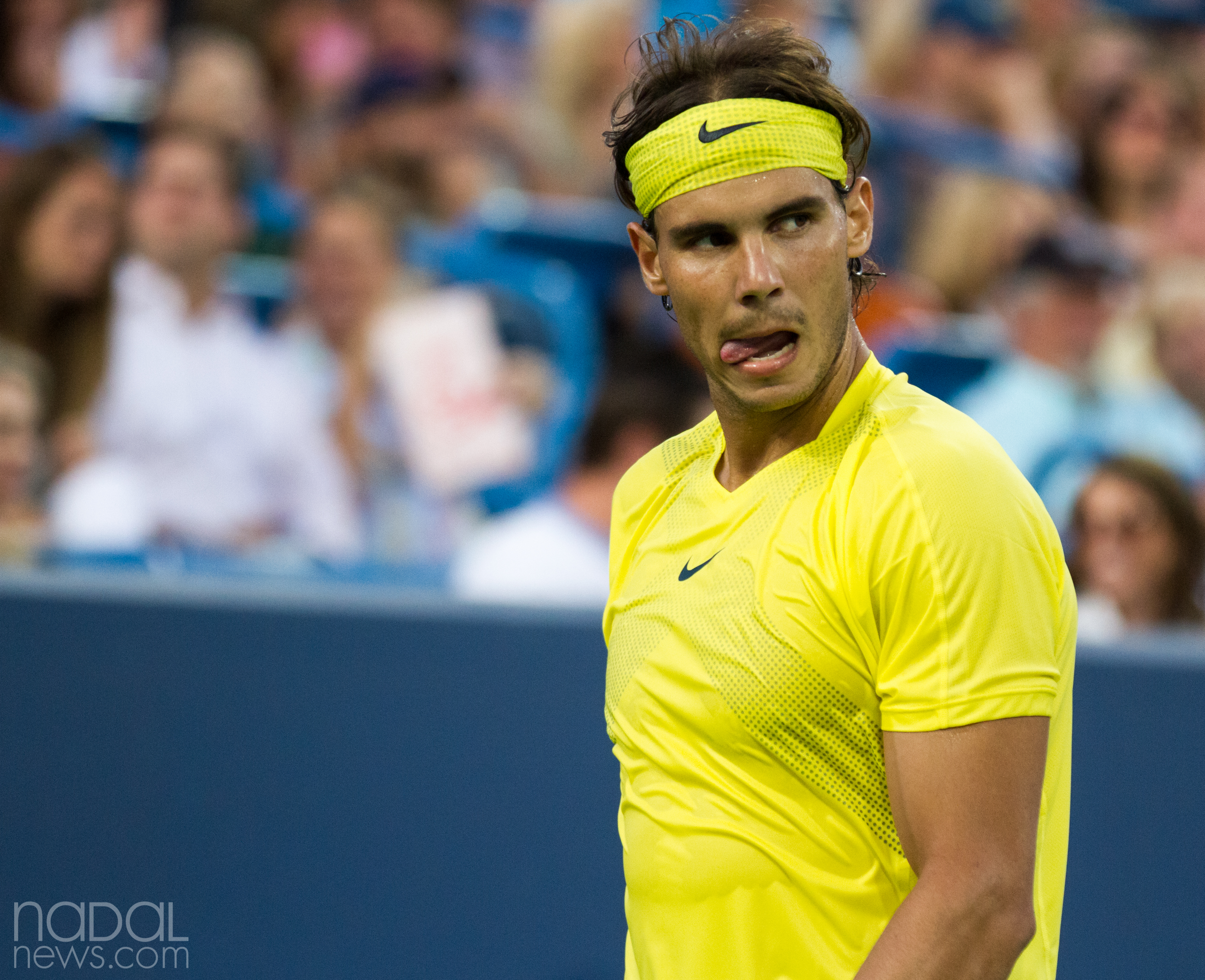
His look may resemble the one of the Spanish “macho”, long hair, sculpted muscles and massive biceps well showed by the sleeveless t-shirts. But in reality Nadal is not a party boy and his values are well-rooted in the sense of family. Whereas many of his rivals found love on the fashion catwalks or in the music studios, Nadal is living a relationship far from the spotlights with his childhood love, Maria Francisca Perello.
In 2009 the equilibrium of his family was broken by the separation of his parents: "My parents' divorce made an important change in my life. It affected me. For one month I was outside the world. I am OK now but you need time to accept.”
As a proof of the importance of the family bonds in his life, the Spanish champion still lives with his family and as he once said he is still chastised by his mother if his room is untidy.
In the same flat, a whole level is occupied by another member of the family, whose bonds with the eight-time-French-Open Champion are as strong as with no-one else: uncle Antonio Nadal, better known as Uncle Toni.
“Everything I have achieved in the game of tennis, all the opportunities I have had, are thanks to him.” Says the nephew. “I’m especially grateful to him for having placed so much emphasis from the very beginning on making sure I kept my feet on the ground and never became complacent.”
The left-handed recalls one precise episode in his childhood to explain how the rough methods of the uncle in the end were always justified by a lesson he would never forget later in his life:
“One very hot day I went to a match without my bottle of water. I’d left it at home. He could have gone and bought me one, but he didn’t. “So that I’d learn to take responsibility, he said. Why didn’t I rebel? Because I enjoyed tennis, and enjoyed it all the more once I started winning, and because I was an obedient and docile child. My mother says I was too easy to manipulate.
“Maybe, but if I hadn’t loved playing the game, I wouldn’t have put up with my uncle. And I loved him too, as I still do and always will. I trusted him, and so I knew deep down that he was doing what he thought was best for me.”
And he surely knew that as Nadal seemed to become more and more of a all-round player, completing his career Grand Slam in 2010 and showing how he could step ahead in his game over and over again, despite new hurdles, new opponents, new injuries.
“In your career you have a lot of good moments and bad ones. The important thing is to have enough motivation to keep working all the days with humility and trying to be a better player than before. I am going to try to continue doing this."
Fans are divided when it comes to his play style, but surely he is a great example to follow when it comes to behaviour and values.
Heather
Watson was forced to retire from her quarter-final match of ITF Barnstaple
against Johanna Konta due to food poisoning.
This match
signed the end of the season for the British number three, who has had far from
a lucky one.
Watson came
to Barnstaple after a promising week in Poitiers,
where she reached the semi-finals, and so her mood and attitude were high after
the difficult season she had just left behind.
Despite
starting the season by collecting her best ranking, Watson was soon forced to
stay away from the tennis courts due to glandular fever, something she found
out only thanks to a blood test. However, she pushed her comeback too early and
hence results failed to arrive, leaving her in a state of unhappiness and
disbelief.
The week in
Poitiers came
at the right time though and earlier this week she said: “I am feeling good and
after having a good week last week, with some very tough matches in three sets,
I am feeling a lot happier, a lot more confident and just enjoying tennis more.”
She looked
very positive also on court both during training and her matches, but sadly
yesterday a bout of food poisoning hit her during her second-round match
against Vrlijc.
Nonetheless,
she overcame the sickness and Vrlijc in order to snatch a three set win, which
allowed her to meet her compatriot and friend Konta today.
The
challenge was too big this afternoon though, and Watson immediately looked
fatigued and unable to produce a quality of tennis good enough to challenge
Konta. As a result, instead of risking further injuries, she decided to retire.
The warm
hug to the net proved the friendship of the two, who are supposed to play
together in the doubles semi-final tomorrow.
The food
poisoning might have ended her season a few days earlier than hoped, but Watson
is a hard worker and she has said she is willing to be ready for the next
season.
“It just
came up being a terrible season, but I am glad I can finish it on a high note
and inspired again and motivated to play and work hard.”
Alarm at
5:20am to go down to Devon for a tennis
tournament, of course it's the day of the biggest storm of the year.
I check
trains to see if they are running and I see they go, all of them but one. The
first of my awfully long series.
F*ck.
My garden after the storm
Think fast,
easy to say, but it's damn 5am...ok, if I take a bus, then the tube I can make
it to the station I need. Run.
A quick
look outside and I see that there is a tree where yesterday I had my clothes
drying in the wind...oh well, ain't no time for that.
Everyone is waiting for news
I make it
to the station, on time, but of course everything is getting cancelled or
delayed...thankfully my train is not cancelled, but it will run or, better,
walk slowly through the storm.
I reach my
last coincidence city 45 minutes late only to find out that the railway it's
flooded, so they are trying to organize a bus. Don't ask me why but I found it
hilarious.
During the
travel I get to know an Italian tennis player, Giulia Gatto Monticone, she's
very cool and she as well agrees to have an interview tomorrow.
Quite a little water
The green
valleys of Devon are flooded and at times it's almost scary to look out of the
window, but eventually I reach Barnstaple.
It's almost
1pm. Time for my job to start, on court, taking pics and contacting players for
interviews.
American Ted Ligety has won his third consecutive race in Soelden earlier this afternoon, proving once again his dominance in the discipline. Ligety showed immediately his amazing condition when in the first run he collected a gap over the rest of the field of nine tenth of a second. Youngsters Pinturault (second) and Hirscher (third) were the immediate followers and then the gap rapidly widened, especially due to the difficult conditions caused by the strong wind and the mild temperatures. As proof of that it is enough to notice how, for the second run, only two racers in the top 30 did not qualify and one of them can blame a crash for that. Surely one of the most interesting and surprising runs was given by one man starting out of the elite group: bib 32, Bode Miller. The American star was starting a World Cup race after more than a year of absence and there was a lot of interest about this comeback. The excitement of seeing his return immediately raised eyebrows as his known-to-be crazy technique appeared to be as effective as prior his injury. No-one around his starting number had done anything alike, but he attacked the slope and bumps with the usual brave attitude and it paid off as he finished 13th (19th after the second run). The second run appeared to follow the pattern given by the yesterday’s Women’s race, as the worsening of the snow conditions favoured the comebacks from behind, like Defago who rose from 27th to 14th place as he ended up with the second best time of the second run. The best time was scored by French Steve Missilier, 13th after the first run, and with this amazing second leg he could challenge the podium as he finished 4th, tied with Norwegian Aksel-Lund Svindal. The French assault was not big enough to move any of the first-round best three names and nothing changed on top, with Ligety once more showing his class even under pressure. The podium was then sealed by the same drivers who finished at the top of last year’s Giant Slalom cup, a clear statement that they will be once again the ones to beat.
Lara Gut wins the first race of the season in Soelden and conquers her first world cup win in Giant Slalom.
The Swiss was already in the lead of the race after the first run with a margin of over Eight tenths of a second on Viktoria Rebensburg and Anna Fenninger.
The biggest surprise of the day came from Tina Maze, though. The Slovene, winner of last year’s overall and Giant Slalom globes, was surely one of the favourites for the win today. Nonetheless she looked quite slow and her preparation may have changed from last year, when she was unstoppable in the early races. She seemed to be in far from her best form and finished sixth after the first run, before plummeting down to 18th position at the end of the race.
In the second run the rise in the temperature caused a big change in snow conditions and the course deteriorated constantly. That situation helped the comeback of athletes like Nadia Fanchini, second at the start in the final run, who scored the best partial time finishing 14th.
Right before the disastrous second run of Maze, another Tina, Weirather, scored an amazing run to secure a place into the top ten. Liechtensteiner Weirather qualified for the second run despite her high bib -37- and in the second run she tamed the bumps and waves on the course like no one else could within the top ten.
Her run let her gain two more positions and she scored her career best result in the discipline, a great accomplishment after the long series of injuries she has suffered in recent years.
The fight for the podium was a contest of four skiers, with Kathrine Zettel the only one close to the best three girls of the first run.
The Austrian skied a terrific second leg, painting great lines down the steep middle section of the Rettenbach glacier. Neither compatriot Fenniger, nor German Rebensburg could finish ahead of her.
In contrast to this, Lara Gut went down with the sole idea of winning and her performance did not fail her expectations. Despite a couple of mistakes in the middle section, the Swiss never stopped trying to accelerate after every turn and in the end this paid off with a terrific win. Her first in Giant Slalom.
As usual, women’s skiing goes break and will come back in three weeks time with the Arctic race of Levi’s slalom, Finland.

 Jelena Jankovic and Caroline Wozniacki have been world number ones for 85 weeks combined, Agnieska Radwanska has reached a slam final and peaked at world number two, Sara Errani has been a solid top 10 player with a slam final in Paris.